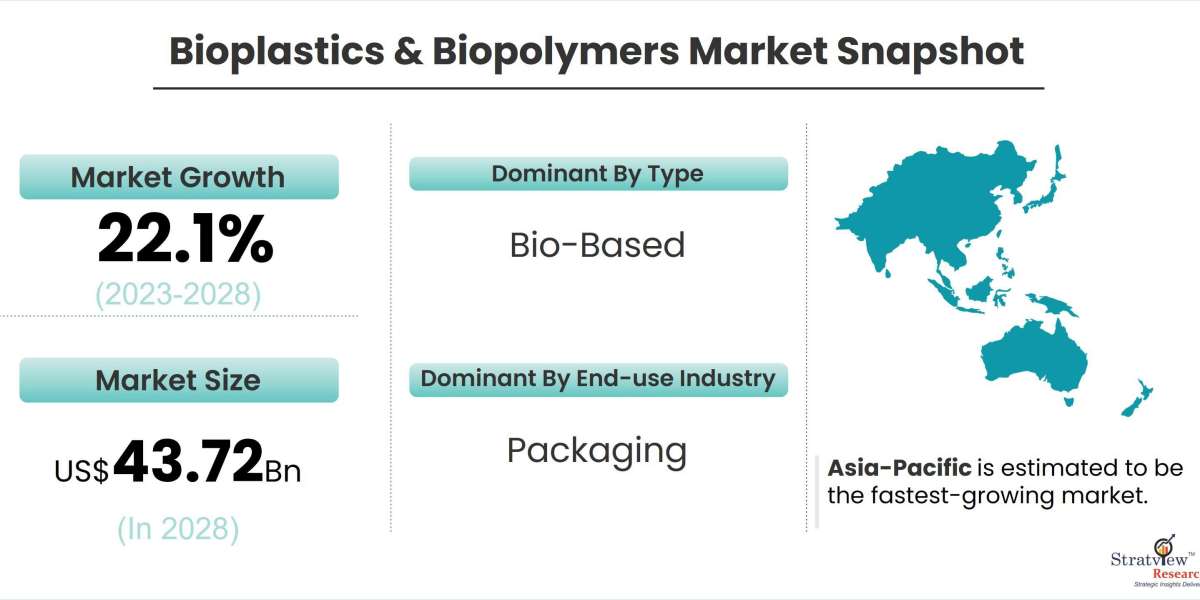
According to Stratview Research, the bioplastics & biopolymers market was estimated at USD 13.11 billion in 2022 and is likely to grow at a CAGR of 22.1% during 2023-2028 to reach USD 43.72 billion in 2028.
In an era defined by environmental awareness and sustainable practices, the Bioplastics & Biopolymers Market stands at the forefront of innovation, offering a promising avenue for sustainable solutions in the plastics industry. This article delves into the dynamics of this market, exploring key insights into how bioplastics and biopolymers are shaping a more environmentally conscious and responsible future.
The Rise of Sustainable Alternatives:
As the detrimental environmental impact of traditional plastics becomes increasingly apparent, there is a growing demand for alternatives that tread lightly on the planet. Bioplastics and biopolymers have emerged as sustainable solutions, offering a way to address the challenges posed by plastic pollution, reliance on fossil fuels, and the depletion of finite resources.
Defining Bioplastics and Biopolymers:
Bioplastics: Derived from renewable sources like corn, sugarcane, or vegetable oils, bioplastics are designed to be biodegradable or compostable, presenting a more environmentally friendly end-of-life scenario compared to traditional plastics.
Biopolymers: These polymers can be produced through biological processes or synthesized using renewable feedstocks. They encompass a wide range of materials, including polylactic acid (PLA), polyhydroxyalkanoates (PHA), and more.
Key Drivers of Market Growth:
Environmental Consciousness: Consumer awareness and concern for the environment are propelling the demand for sustainable products. As consumers seek eco-friendly alternatives, businesses are turning to bioplastics and biopolymers to meet this demand, driving market growth.
Regulatory Support: Governments and regulatory bodies worldwide are enacting policies that favor sustainable practices. Incentives, tax breaks, and regulations promoting the use of biodegradable and renewable materials are fostering a supportive environment for the Bioplastics & Biopolymers Market.
Corporate Sustainability Initiatives: Businesses are increasingly adopting sustainability as a core value. Many leading corporations are integrating bioplastics and biopolymers into their supply chains as part of broader sustainability initiatives, enhancing their environmental credentials.
Technological Advancements: Ongoing research and development efforts are advancing the properties and applications of bioplastics and biopolymers. Improved performance characteristics, cost-effectiveness, and expanded applications are boosting market acceptance.
Challenges and Overcoming Obstacles:
Economic Viability: While the cost of bioplastics and biopolymers has decreased over the years, they may still face challenges in achieving cost parity with traditional plastics. Continued advancements in production processes and economies of scale are crucial to improving economic viability.
Waste Management Infrastructure: The successful integration of bioplastics into a circular economy relies on effective waste management and recycling infrastructure. Developing comprehensive systems for collecting, processing, and recycling bioplastics is essential to maximize their environmental benefits.
Consumer Education: Widespread acceptance of bioplastics requires consumer education on their benefits, proper usage, and disposal. Clear labeling and educational campaigns can play a significant role in fostering understanding and encouraging responsible consumer behavior.
Future Outlook and Conclusion:
The Bioplastics & Biopolymers Market is positioned as a beacon of sustainability in the plastics industry, offering tangible solutions to mitigate the environmental impact of traditional plastics. As technological innovations continue to address challenges, and consumer awareness grows, the future of bioplastics and biopolymers looks promising.
In the pursuit of sustainable solutions, the insights gained from navigating the Bioplastics & Biopolymers Market underscore the potential for positive environmental change. Through collaborative efforts, technological advancements, and a collective commitment to sustainability, these materials are set to play a transformative role in shaping a greener, more resilient future for our planet.