
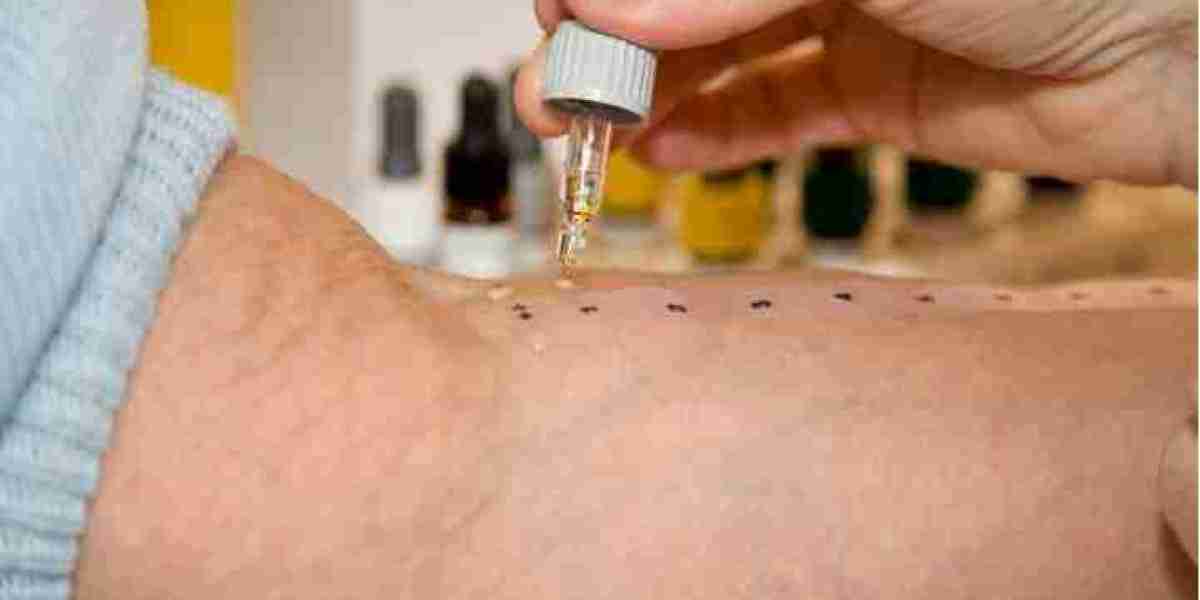
As searches for a ‘food intolerance test’ have soared and sales of these tests have boomed, patients want in-depth knowledge and support navigating food intolerances. Yet they also need reliable methods to diagnose them in the first place.
But the commercial tests on offer are flawed and can lead to false diagnoses, anxiety, useless strict avoidance diets and nutritional deficiencies.
Alternative allergy tests
There are a number of alternative allergy tests that claim to identify allergies to specific foods. These include the cytotoxic test, skin end-point titration test, provocation/neutralisation sublingual or subcutaneous testing, kinesiology, biorisonance and electro-acupuncture. They have not been scientifically validated and are prone to false positive reactions. They may also lead to incorrect diagnoses and a useless strict avoidance diet.
These tests measure the levels of IgE antibodies in your blood. But, they don't necessarily indicate a food allergy, as increased IgE levels can also be caused by other things such as stress or smoking.
Some of these 'tests' use a blood sample taken in your care professional's office to analyse the level of immunoglobulin E (IgE) antibodies against a number of different foods. This doesn't prove that you have an allergy to a particular food, but it can help your care professional understand your symptoms.
Blood test
Food intolerances are usually caused by your body not producing enough of the enzyme used to break down a particular food. The most common intolerance is lactose, which is found in dairy products and can cause symptoms such as bloating, diarrhoea and itchy skin. Food sensitivities, on the other hand, are a reaction to a specific food or ingredient.
Unlike food allergies, which are detected by a blood test, there are no validated tests for intolerances (except for breath testing to check for lactose intolerance). This means that the best way to discover your intolerances is through a methodical elimination diet, ideally with the help of a registered dietitian.
The most common blood tests include the kappa or lambda free light chain, which detects high protein levels in your blood; CE complement, a measure of how well your liver is functioning; and erythrocyte sedimentation rate, which indicates inflammation. All of these are used to diagnose and monitor various health conditions, including autoimmune disorders. Blood test results are usually written as numbers and are often compared to normal reference ranges, which vary by age, sex and medical history.
Pulse test
Pulse testing is a quick and painless test that measures blood oxygen saturation in your fingertips. A nurse will put a small clip-like device on your finger, earlobe or toe and shine a light through it. The device reads the levels of oxygen in your red blood cells and shows how well your arteries are working.
If the food increases your pulse by more than four beats per minute, it's an irritant and you should avoid it. However, it's not proof of intolerance to the food, explains functional medicine dietitian Lacey Dunn.
This method of permeability testing is based on unsteady-state flow theory and can detect diagnostic pressure responses much faster than interference tests can, especially in low-permeability reservoirs. It also produces less noise than interference tests. The technique requires only a small time difference between the pulsing and observation wells and does not disturb reservoir properties by changing their pressures for long periods of time.
Electromagnetic conductivity test
Electromagnetic conductivity (EM) instruments are comprised of transmitter and receiver coils that are electrically connected but separated at a fixed distance. The transmitter coil generates an electromagnetic field that induces electric currents in conductive material in the subsurface. These currents are detected by the receiver coil.
When the EM instrument is brought close to a conductive sample, the induced currents, known as eddy currents, pursue circular paths that are opposed to those of the magnetic field. The existing defects in the sample and changes in the conductivity and magnetic permeability of the material cause shifts in the intensity, pattern and phase of these currents.
The VEGA or Voll test, and later transistorised/computerised versions such as Dermatron, BEST and Quantum, are based on the theory that allergy or intolerance to an allergen is associated with a change in the electromagnetic conductivity of the body. This is measured using a Wheatstone bridge Galvanometer and one or more electrodes placed on an acupuncture point. Applied Kinesiology is another alternative to a blood or skin allergy test and involves the practitioner testing the patients shoulder strength against each allergen. If the patient cannot hold out their arm against the practitioners counter pressure, this indicates a weakness and the allergen is diagnosed.

![Biometric-as-a-Service Market Intelligence Report [2023-2032] | Gain a Competitive Advantage](https://social.kubo.chat/upload/photos/2023/09/13wF9Rup7cXHZfH3yG7r_01_8b38d649767bcc185f54725e40ac03be_image.jpeg)